Wonder came first
Physics began as a question about how stars, planets and the universe came to be.
A literary trilogy with an open physics companion
Some of physics’ difficulty belongs to nature. Some appears when explanations hide the physical steps between a source, the signal that carries evidence of it, the receiver and the mechanism used to explain what is measured.
Between the Beats follows those steps through fiction — from cosmological signals and moving observers to electromagnetic fields and organised matter.
The measurements remain. The mechanisms used to explain them are examined again.
No equations. Not even E=mc2. The novels remain novels. The technical arguments appear only in the companion, when you choose to go deeper.
Book One coming soon · Get the release announcement
Why this exists
A childhood fascination with stars and planets became a lifelong discomfort with small jumps in familiar explanations. Engineering made the questions clearer; fiction finally gave them a way out.
Physics began as a question about how stars, planets and the universe came to be.
Popular science and later engineering sharpened the questions without making every explanatory jump disappear.
One novel became a trilogy, and the technical arguments eventually needed a public companion of their own.
The trilogy
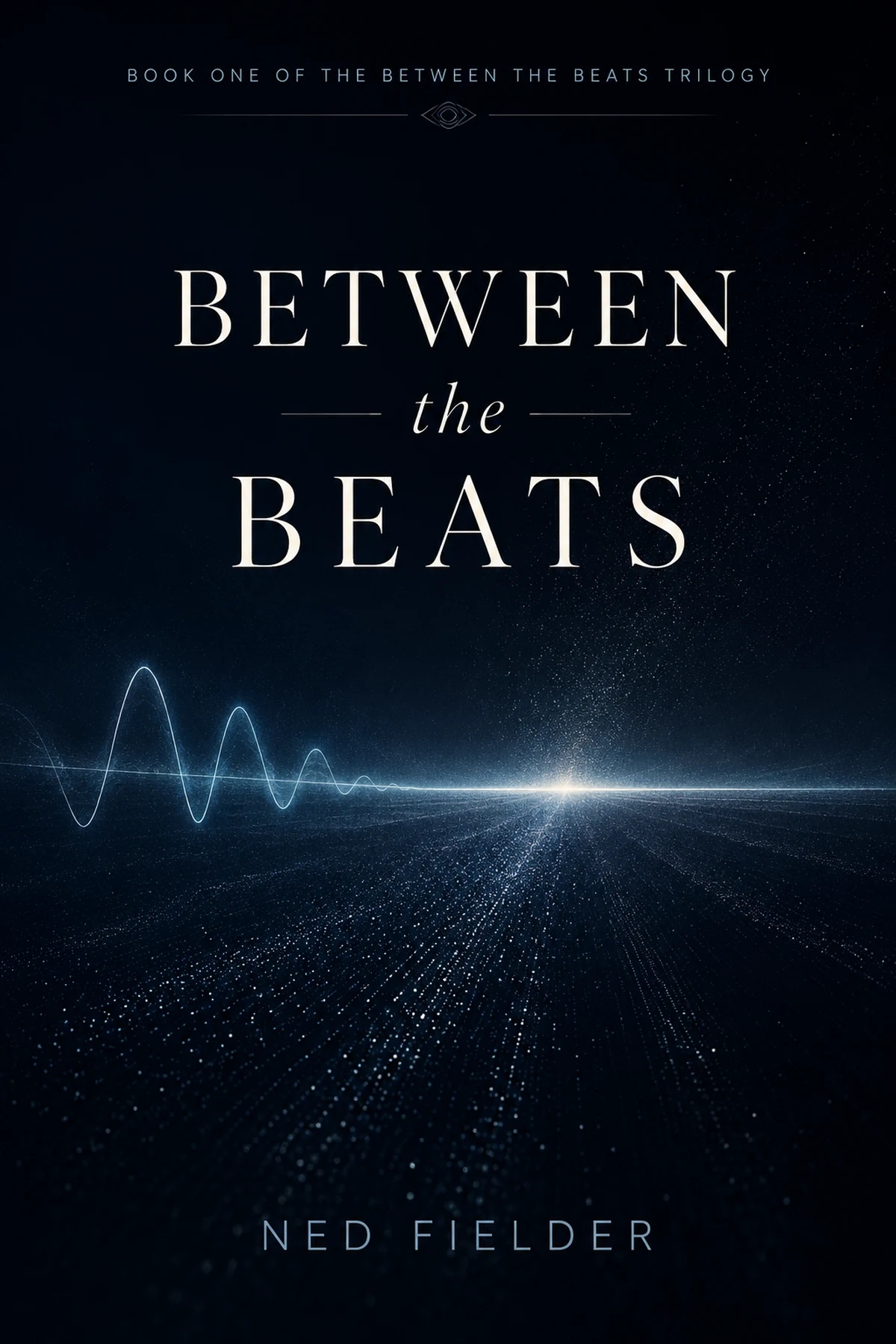
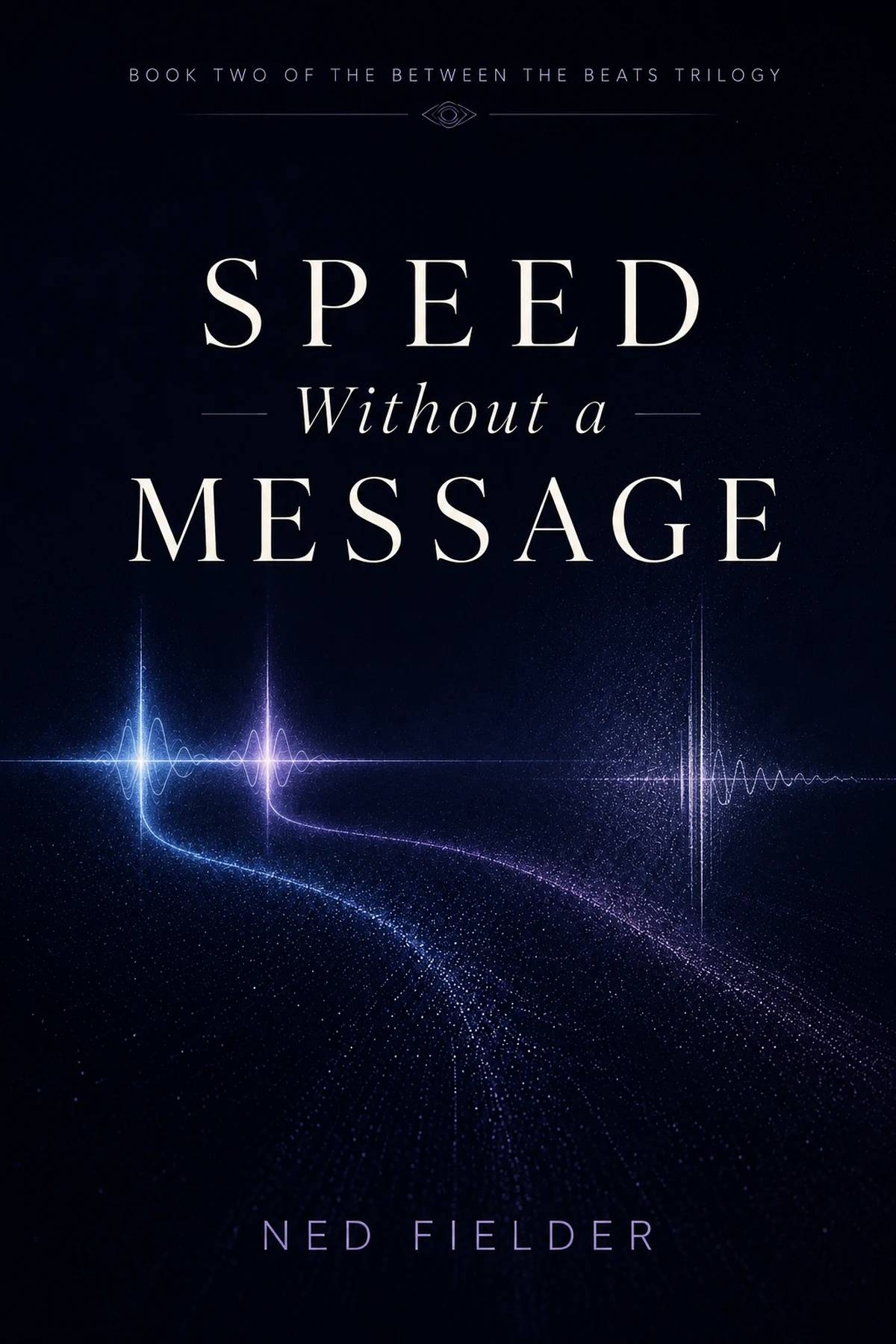
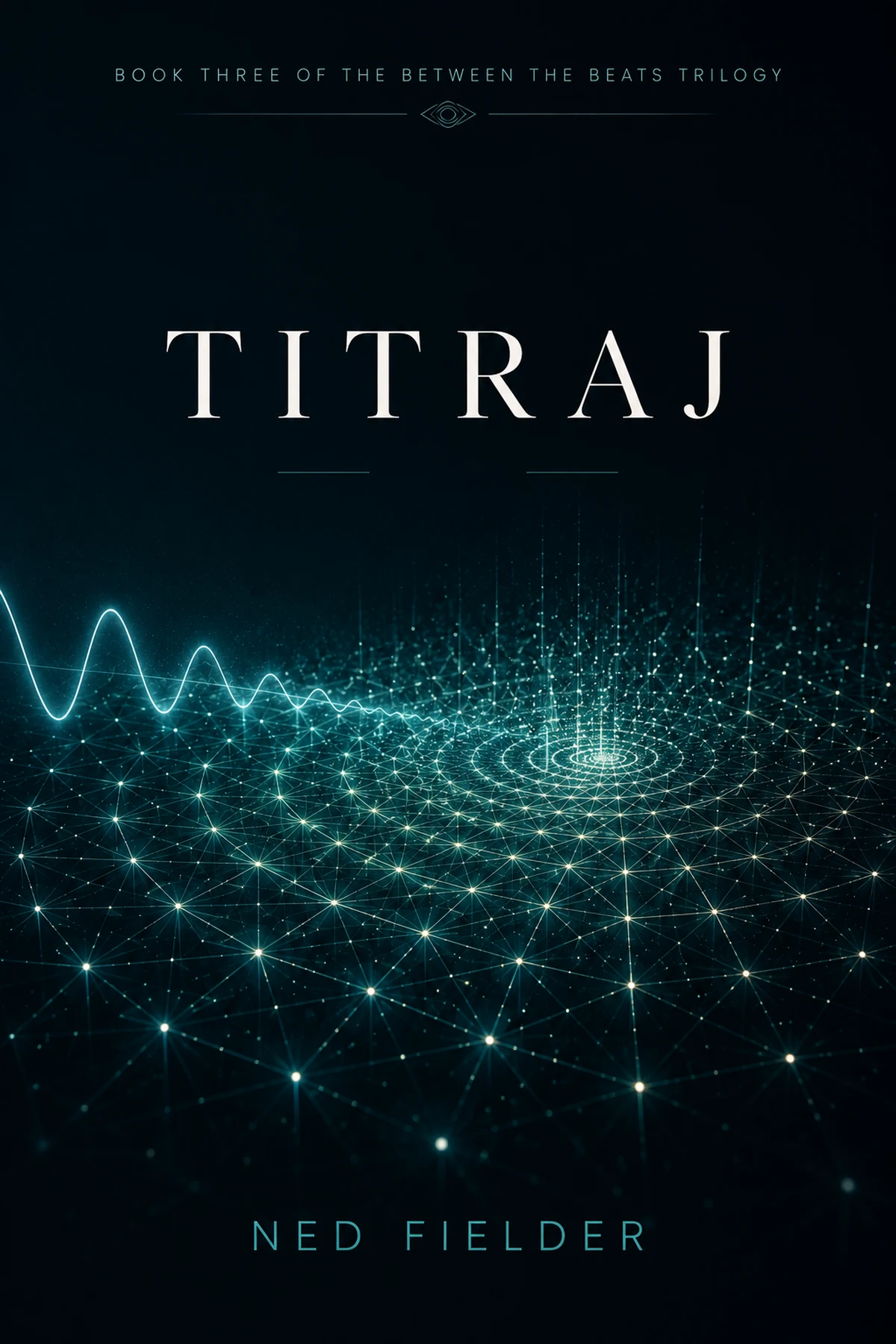
The books keep the measurements in place while each moves the unresolved physical step somewhere new: into the journey of the signal, the moving receiver, or the organised matter that emits and receives light.
Novel One
Coming soon
The first book explores cosmology through the propagation of light. A telescope receives an electromagnetic signal only after an immense journey. What if that journey has physical transfer properties that belong inside the reconstruction of cosmic history?
Central question: Did we infer the cosmos before we understood the channel?
Novel Two
Complete manuscript · planned autumn 2026
The second book separates the speed of a travelling light front from the rate at which it encounters a moving receiver, then follows that distinction through Doppler reception, clock synchronization and Lorentz transformations.
Central question: What actually moves at c — and what does not have to?
Novel Three
Complete manuscript · planned early 2027
The third book turns from propagation to mechanism. It asks whether emission, absorption and electron escape can be reconstructed as responses of organised charged matter connected by an electromagnetic field, while keeping the successful quantum laws as quantitative obligations.
Central question: Can a physical mechanism be rebuilt beneath the formalism?
The question between the books and the physics
What physical step sits between what was measured and the mechanism used to explain it?
The portal does not ask you to accept a finished replacement theory. It asks you to keep these stages separate long enough to inspect what is measured, what is reconstructed and what still has to be explained physically.
Explore the questions without equationsChoose your depth
You do not have to pass through a wall of physics to understand the central questions.
Meet the people who carry the questions into their work, families and choices.
Read the fiction →QUESTIONSBegin with ordinary-language questions and short answers before opening equations.
Follow the reasoning →PHYSICSBrowse the growing collection of derivations, sources, objections and open experimental obligations.
Enter the companion →Read the fiction
Each excerpt is a complete, indexable page and can be read without opening the physics companion.
Novel Three
Tomáš arrives and asks where physics changed its nouns.
Read · about 10 minutesResearch Notes
Short dated notes show how a question, scene or thought experiment changed while the books and companion were being developed.
· Development note
The familiar train argument focuses on the passenger at the midpoint. Adding another passenger reveals something more basic: simultaneous reception belongs to the local meeting place of the two flashes, not automatically to an entire reference frame.
Read the noteFollow the project
Receive occasional updates about publication, new excerpts and additions to the physics companion.
Occasional updates only. Unsubscribe at any time.
About
The project grew from telecommunications and signal processing, but the books remain novels rather than textbooks.
About the author and approachSupport
Help the trilogy continue through editing, design, publication, and the work of bringing it to readers.
Support on Ko-fiContact
For representation, publication, translation, editorial or reader inquiries.
Contact the author